
Call Us Today
+86-13161061539
Send us
- All
- Product Name
- Product Keyword
- Product Model
- Product Summary
- Product Description
- Multi Field Search
Views: 0 Author: Site Editor Publish Time: 2026-08-26 Origin: Site


Commissioning and qualification of a freeze drying system represent far more than standard regulatory hurdles. They form a critical path to production uptime and compliance. In regulated environments, an undocumented machine remains an unusable machine. Auditors will instantly reject product batches if you cannot prove strict environmental control. We rely on standard validation sequences to mitigate these operational risks effectively. You progress logically through Design Qualification (DQ), Factory Acceptance Testing (FAT), and Site Acceptance Testing (SAT). Afterward, you execute Installation Qualification (IQ), Operational Qualification (OQ), and Performance Qualification (PQ). This structured framework ensures every component functions precisely as intended. It protects product integrity while preventing costly production delays. In this comprehensive guide, you will learn how each validation phase connects. We will explore specific critical checks required at every single stage. You will also discover how to evaluate vendor support documentation confidently. Proper upfront preparation streamlines your validation process and ensures rapid market deployment.
Sequential Dependency: Each phase of freeze dryer validation builds on the previous; skipping steps guarantees costly compliance deviations.
Location Matters: FAT occurs at the vendor’s facility to catch fundamental flaws, while SAT/IQ/OQ/PQ occur on-site to verify environmental integration.
Vendor Accountability: Comprehensive vendor documentation (Traceability Matrix, executed protocols) accelerates time-to-market and reduces internal QA burden.
Application Specificity: Validation rigor scales with the application—pharmaceutical freeze dryers require strict GMP adherence, whereas food-grade systems allow for tailored, streamlined protocols.
Poor validation practices introduce massive financial risks to manufacturing facilities. A failed regulatory audit halts production immediately. Delayed product launches damage your competitive market position. Whole batches of highly valuable biological products face mandatory rejection upon validation failures. Proper lyophilizer qualification eliminates these severe operational nightmares. You must prioritize structured risk mitigation from day one.
Success requires establishing clear, uncompromising evaluation criteria early. You need a continuous, highly traceable documentation line. This line connects your initial User Requirement Specifications (URS) directly to final operational performance. Regulators expect total transparency throughout this lifecycle. Missing links between specifications and actual test results invite immediate auditor scrutiny.
We establish a rigorous compliance baseline using recognized global industry standards. Follow ISPE guidelines for pharmaceutical commissioning and qualification. Software control systems demand strict FDA 21 CFR Part 11 adherence. Ensure comprehensive electronic audit trails and secure digital signatures. Follow current Good Manufacturing Practices (cGMP) for all hardware construction. A robust qualification strategy proves your equipment operates safely and reliably under all specified conditions.
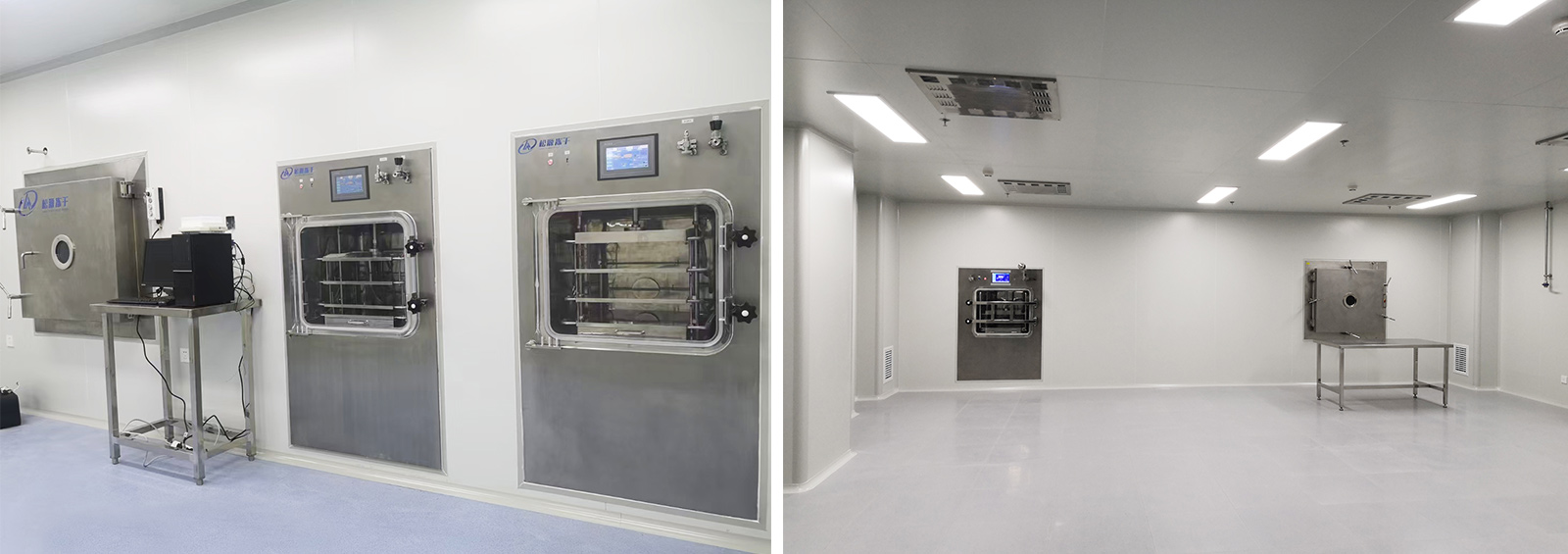
Design Qualification serves as your foundational engineering blueprint. It systematically verifies every crucial engineering design choice. The proposed technical design must answer every single point listed in your URS. Engineers review piping schematics, sensor placements, and material choices meticulously.
Implementation reality often differs vastly from theoretical planning. Project teams sometimes treat DQ as a mere paperwork formality. This careless approach creates immense downstream risk. Rigorous DQ prevents highly expensive retrofits later. Finding a structural design flaw during the DQ review costs nothing to fix. Discovering that same flaw during cleanroom installation costs thousands of dollars and weeks of delays.
Factory Acceptance Testing happens exclusively at the vendor manufacturing site. You execute this vital phase before they crate and ship the unit. We verify fundamental machine functionality first. Engineers meticulously test software logic and operator screen navigations. They check safety interlocks by deliberately simulating system faults.
Key checks during FAT include:
Basic mechanical functionality of doors and latches.
Software logic sequences and automated cycle transitions.
Safety interlocks protecting operators from moving parts.
Build-quality verification covering weld finishes and polish levels.
Apply a strict decision lens during this phase. Identifying deviations here costs significantly less to resolve than post-delivery fixes. Vendors possess all necessary fabrication tools and software developers right at their factory. Fixing a software bug during FAT takes hours. Fixing it on your manufacturing floor takes days.
Site Acceptance Testing occurs immediately after equipment delivery. You must confirm the freeze drying system survived transit safely. Shock indicators mounted on the shipping crates provide initial visual clues. Next, verify the physical footprint. The machine must fit your facility layout precisely without blocking access routes.
Engineers then check key facility utility hookups. They test incoming power voltage stability. They verify chilled water flow rates match vendor requirements. They confirm compressed air pressure levels remain consistent. Successful SAT proves the unit integrates cleanly into your unique building infrastructure.
Installation Qualification provides documented, absolute proof of proper assembly. The equipment must match manufacturer specifications perfectly. IQ eliminates any installation guesswork. You document every valve, wire, and pipe physically present on the skid.
Key checks during IQ include:
Piping and Instrumentation Diagrams (P&ID) Walk-downs: Engineers physically trace every fluid line. They verify physical valve tags match the engineering drawings exactly.
Material Certificates: You must collect documents proving material composition. Verified 316L stainless steel prevents future product contamination.
Sensor Calibration Verification: Calibrated sensors ensure highly accurate data logging. You check calibration certificates for every temperature and pressure probe.
Skipping detail during IQ leads to catastrophic failures later. Proper installation forms the bedrock for all subsequent performance testing.
Operational Qualification tests the completely empty chamber. We intentionally push the machine against extreme specified limits. This stress-testing proves the system handles worst-case manufacturing scenarios confidently. We do not use any product during this phase.
Key checks include measuring maximum vacuum leak rates. You must confirm the chamber holds a deep vacuum over extended periods. Shelf temperature uniformity requires rigorous thermal mapping. We place dozens of calibrated thermocouples directly across all shelves. Condenser cooling rates verify rapid freezing capabilities under load. Alarm testing ensures safety protocols activate correctly when parameters drift.
Performance Qualification introduces actual loads into the chamber. You test the system utilizing a fully loaded chamber environment. Some teams use generic placebo formulations initially. Others use the actual active biological product.
Key checks involve assessing the absolute reproducibility of the lyophilization cycle. We rigorously measure the residual moisture content of the final dried cake. We thoroughly test biological and chemical stability post-lyophilization. The product must survive the cycle unharmed.
Watch out for a significant implementation risk here. PQ often exposes hidden facility utility fluctuations. Unstable plant cooling water or voltage drops can fail a perfectly programmed PQ cycle. You must ensure facility utilities remain rock-solid.
Table 1: Parameter Comparison for OQ and PQ Execution
Validation Parameter | Operational Qualification (OQ) | Performance Qualification (PQ) |
|---|---|---|
Chamber Load Status | Empty chamber testing | Fully loaded chamber (placebo/product) |
Thermal Mapping Goal | Verify bare shelf temperature uniformity | Verify uniform heat transfer into product vials |
System Stress Level | Tested against extreme upper/lower limits | Tested at normal operational setpoints |
Success Metric | Machine meets specified engineering tolerances | Product meets critical quality attributes (CQA) |
Application specificity strictly dictates your required validation intensity. A GMP freeze dryer demands extreme operational rigor. Pharmaceutical applications prioritize ultimate patient safety above all other metrics. You need exhaustive documentation for every single component. Strict change control procedures prevent any unauthorized machine modifications.
A true pharmaceutical freeze dryer requires stringent 21 CFR Part 11 compliant data logging. Every parameter shift must generate a traceable electronic signature. Uncompromising sterility assurance continuously drives these strict requirements. You cannot cut corners in pharmaceutical environments.
Conversely, food-grade freeze dryers operate under entirely different regulatory paradigms. Basic hygiene and operational safety remain mandatory. You must comply with standard HACCP and FSMA safety regulations. However, executing full pharmacological IQ/OQ/PQ protocols proves highly over-engineered for food production. It wastes massive amounts of internal resources.
Follow a clear evaluation criteria framework. Guide your buying team to right-size your specific validation package. Base this decision strictly on your target consumer market. Avoid paying for unnecessary paperwork. Tailor the test protocols to address food safety hazards directly.
A seamless freeze dryer validation execution relies entirely on strong vendor support. Assess their documentation packages very carefully before purchasing. Does the vendor provide pre-written, highly detailed protocol templates? Or do they merely hand over a basic instruction manual? High-quality vendors proactively supply comprehensive, pre-approved test scripts.
Evaluate their technical execution services. Do they offer experienced on-site engineers? Vendor engineers execute SAT, IQ, and OQ testing highly efficiently. If they lack this service, you must hire expensive third-party validation contractors.
Examine their Requirements Traceability Matrix (RTM) practices. Top-tier vendors proactively maintain a robust RTM. This critical document links every executed test directly back to your original URS. It definitively proves you tested precisely what you initially requested.
Take proactive next-step actions immediately. Advise your purchasing buyers to request a sample validation document package. Do this exclusively during the early procurement phase. This strategy quickly gauges true vendor maturity and technical capability.
Effective lyophilization equipment qualification is never a solo endeavor. It represents a deeply strategic partnership connecting the equipment manufacturer and the end-user. Proper execution protects your product, your patients, and your financial bottom line.
Define strict user requirements early: Clear specifications prevent costly downstream misalignments.
Leverage vendor expertise: Use vendor engineers to execute complex validation protocols efficiently.
Maintain meticulous documentation: Ensure your traceability matrix seamlessly connects requirements to final test results.
Right-size your approach: Scale your validation rigor appropriately based on pharmaceutical or food-grade applications.
Do not wait until equipment delivery to plan your validation strategy. Encourage your internal teams to consult with specialized engineering groups early in the URS drafting phase. Request a comprehensive commissioning and qualification consultation from your chosen vendor today.
A: Factory Acceptance Testing (FAT) occurs at the vendor’s manufacturing facility using their local factory utilities. It verifies basic machine functionality and software logic before shipping. Site Acceptance Testing (SAT) happens at your final installation location. It uses your facility’s specific utilities to ensure the machine integrated successfully and survived the transit process unharmed.
A: Standard commercial units generally require a few weeks for complete validation. However, customized GMP pharmaceutical systems often take several months. This extended timeline accommodates exhaustive documentation reviews, complex thermal mapping processes, and rigorous software compliance checks required by regulatory bodies.
A: Yes, many validation teams utilize combined IOQ protocols to save critical project time. Auditors regularly accept this streamlined approach for standard, well-understood equipment. However, you must sequentially complete and sign off on specific installation prerequisites before executing the operational performance tests.
A: The end-user or the official manufacturer of record holds ultimate responsibility for Performance Qualification. Vendors provide essential technical guidance and necessary protocol assistance. However, verifying the final product reliably meets all quality standards remains the facility owner's strict, non-transferable regulatory obligation.