
Call Us Today
+86-13161061539
Send us
- All
- Product Name
- Product Keyword
- Product Model
- Product Summary
- Product Description
- Multi Field Search
Views: 0 Author: Site Editor Publish Time: 2026-08-24 Origin: Site


Controlling water content in freeze-dried pharmaceuticals is not just a basic quality metric. It represents a critical survival factor for sensitive biologics. A fraction of a percent difference determines whether a life-saving drug remains stable for years or degrades within weeks.
In the context of biopharmaceutical stability, we must distinguish between tightly bound structural water and loosely held unbound water. Inadequate moisture control inevitably leads to compromised active pharmaceutical ingredients (APIs). This commercial reality causes failed batches, financial losses, and swift regulatory rejections. Facility managers must treat lyophilization as an exacting science to avoid these pitfalls.
You will learn how precise measurement and stringent GMP compliance dictate product viability. We will also explore how choosing the right lyophilization equipment directly mitigates production risks. Master these principles to protect your product lifecycle, satisfy stringent regulatory audits, and ensure consistent therapeutic efficacy across every single vial.
Residual Moisture in Lyophilized Products directly dictates shelf-life, API stability, and reconstitution times.
Striking the balance is critical; excessive moisture causes degradation, while over-drying can induce protein denaturation.
Regulatory bodies (FDA, EMA) require validated moisture limits and robust testing methodologies (e.g., USP <922>).
Achieving consistent moisture targets at scale requires advanced process analytical technology (PAT) integrated into your production freeze dryer.
Understanding the exact levels of Residual Moisture in Lyophilized Products is foundational to formulation stability. Moisture content directly influences the glass transition temperature (Tg) of your product. Water acts as a powerful plasticizer in amorphous solids. Higher water content lowers the Tg. If the storage temperature exceeds this lowered Tg, the lyophilized cake undergoes structural collapse. Slight deviations from the target moisture profile can cut product shelf life by months.
Operators must carefully navigate the delicate balance of drying. Both extremes present severe risks to the final product.
Over-drying vs. Under-drying Analysis Chart
Condition | Primary Quality Risks | Biological Impact |
|---|---|---|
Under-drying | Promotes rapid hydrolysis and oxidation. | Accelerates biological degradation and bacterial growth. |
Over-drying | Removes essential structural bound water. | Causes irreversible protein aggregation or loss of biological activity. |
Financial consequences tied to batch failure are severe. Non-compliance often results in scrapped batches worth millions. Quality investigations prolong production delays. Delayed time-to-market disrupts patient access and damages brand reputation. Facility leaders must view optimal moisture control as a critical business imperative.
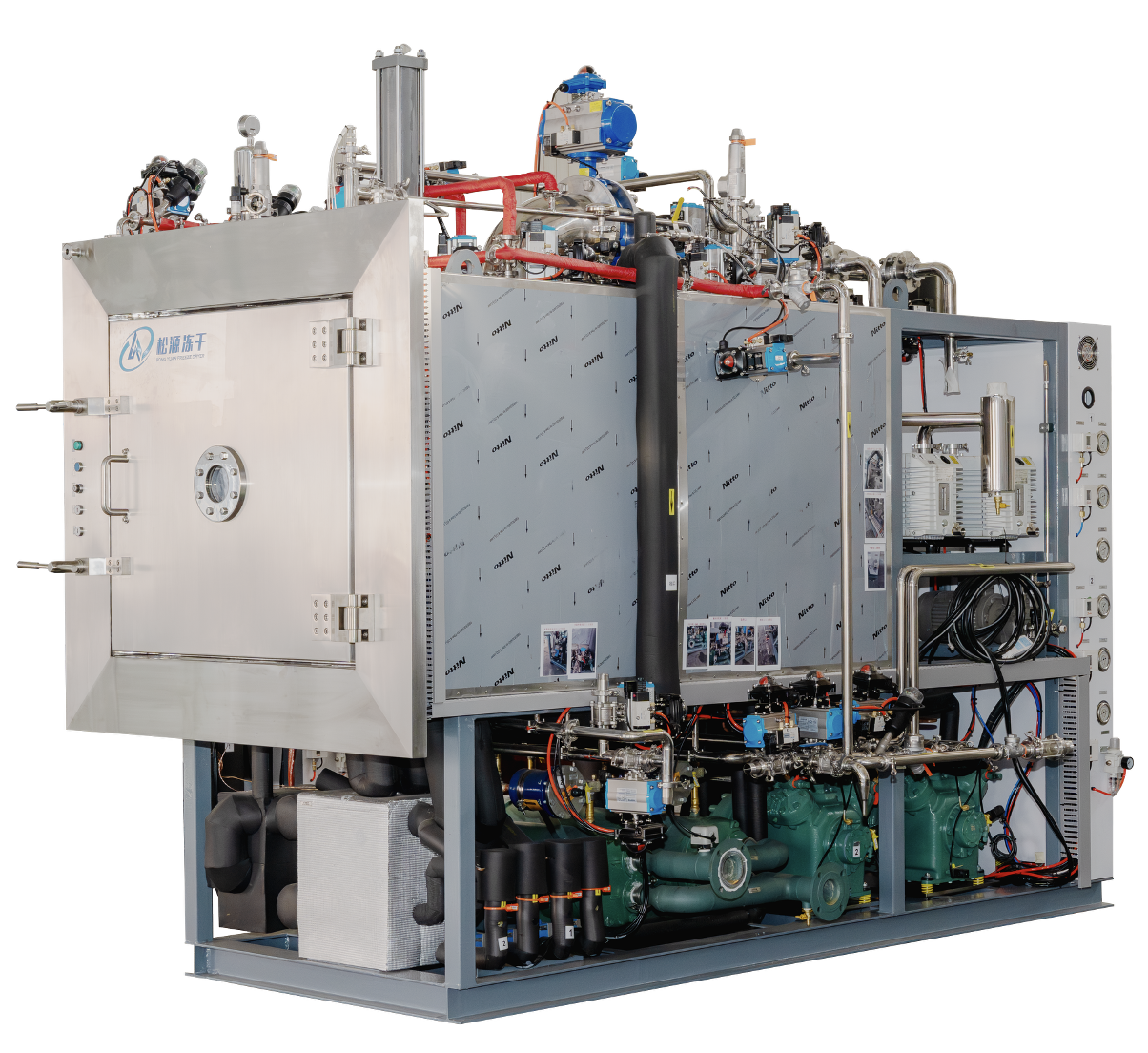
Navigating compliance standards requires a data-driven approach. Regulatory bodies like the FDA and EMA do not accept arbitrary moisture benchmarks. They expect manufacturers to establish residual moisture specifications based entirely on empirical stability data. You must prove your chosen limit directly correlates to long-term API viability.
Evaluating analytical methods is crucial for maintaining compliance. Facilities typically rely on three primary methodologies to measure water content:
Karl Fischer Titration (KFT): KFT remains the historical gold standard for moisture testing. It provides highly accurate results. However, it is a destructive test, meaning you lose the sample vial.
Thermogravimetric Analysis (TGA): TGA is exceptionally useful for detailed thermal profiling. It helps scientists differentiate between tightly bound water and free unbound water.
Near-Infrared (NIR) Spectroscopy: NIR offers a non-destructive, rapid testing alternative. It enables 100% batch inspection when properly integrated into the workflow.
Trust and verification remain paramount in pharmaceutical manufacturing. Relying solely on theoretical cycle models exposes facilities to regulatory audit risks. Continuous empirical validation proves your equipment consistently hits the target metric. Auditors expect to see documented proof rather than theoretical assumptions.
Process Analytical Technology (PAT) integration defines modern lyophilization. You must assess how well the equipment monitors real-time sublimation and desorption. Advanced PAT tools track vapor mass flow without interrupting the critical vacuum cycle. This continuous data stream empowers operators to make informed, mid-cycle adjustments.
Shelf temperature uniformity dictates product consistency. Precise thermal mapping is completely non-negotiable. If shelves exhibit uneven heating, vials in different locations will dry at different rates. You need absolute thermal control to ensure consistent moisture content across every single vial inside a Biopharmaceutical Production Freeze Dryer.
Advanced vacuum and pressure capabilities play a vital role during secondary drying. Secondary drying relies on deep vacuums to drive desorption. Evaluate the system's ability to maintain tight capacitance manometer control. Precise pressure management safely strips away unbound water without damaging the protein structure.
Vendor transparency is a major evaluation factor. You should closely scrutinize equipment manufacturer claims regarding moisture control tolerances. Demand comprehensive Factory Acceptance Testing (FAT) data. Verify their claims against actual performance metrics before approving the purchase.
The pilot-to-production gap frequently disrupts scaling efforts. Transferring a cycle from a lab-scale unit to a full-scale Production Freeze Dryer introduces new variables. Engineers often encounter severe edge effects. Vials near the chamber walls receive different radiant heat than center vials. Varied heat transfer coefficients alter the entire sublimation timeline.
Secondary drying optimization requires strategic planning. You must map the desorption phase precisely at scale. Uneven shelf temperatures during secondary drying create varied residual moisture profiles across the batch. Adjusting ramp rates and hold times mitigates these dangerous thermal inconsistencies.
Risk mitigation and validation secure your investment. You must execute rigorous Operational Qualification (OQ) and Performance Qualification (PQ) protocols on any new GMP Freeze Dryer. These steps ensure the system reliably delivers repeatable moisture levels. Documenting empty chamber mapping and loaded chamber mapping proves the equipment performs as expected.
Shortlisting logic helps you choose the right vendor. Ask prospective equipment manufacturers specific questions. Inquire about maximum load capacities and advanced cycle programmability. Discuss their post-installation support structure. Reliable technical support ensures long-term operational success and minimizes unexpected downtime.
Controlling moisture content demands relentless operational discipline. It is an ongoing process control strategy, not just a one-time validation step. Your facility must continuously monitor, measure, and optimize every lyophilization cycle.
Upgrading or procuring appropriate lyophilization technology represents the most reliable pathway to scaling securely. Modern equipment equipped with PAT and precise thermal controls removes the guesswork from pharmaceutical manufacturing. It protects your biologics from premature degradation.
We recommend evaluating your current equipment capabilities immediately. Consult with process engineers to identify existing drying bottlenecks. Request technical specifications for production-grade freeze drying systems. Taking proactive steps today ensures your batches remain compliant, stable, and ready for the market tomorrow.
A: The typical acceptable range usually falls between 1% and 3%. However, strict targets must be determined empirically. You must base these limits on the specific formulation stability profiles and active ingredient requirements.
A: Secondary drying relies on elevated shelf temperatures and deep vacuum environments to desorb bound water. Precise control during this specific phase dictates the final fractional percentage of moisture retained in the cake.
A: Yes, automated testing is highly achievable. Utilizing non-destructive methods like Tunable Diode Laser Absorption Spectroscopy (TDLAS) or NIR within modern production freeze dryers allows for real-time monitoring and seamless automation.
A: Differences in internal chamber geometry, vapor port design, and shelf thermal fluid dynamics heavily alter heat and mass transfer rates. These physical variations emphasize the critical need for scale-specific cycle optimization.